

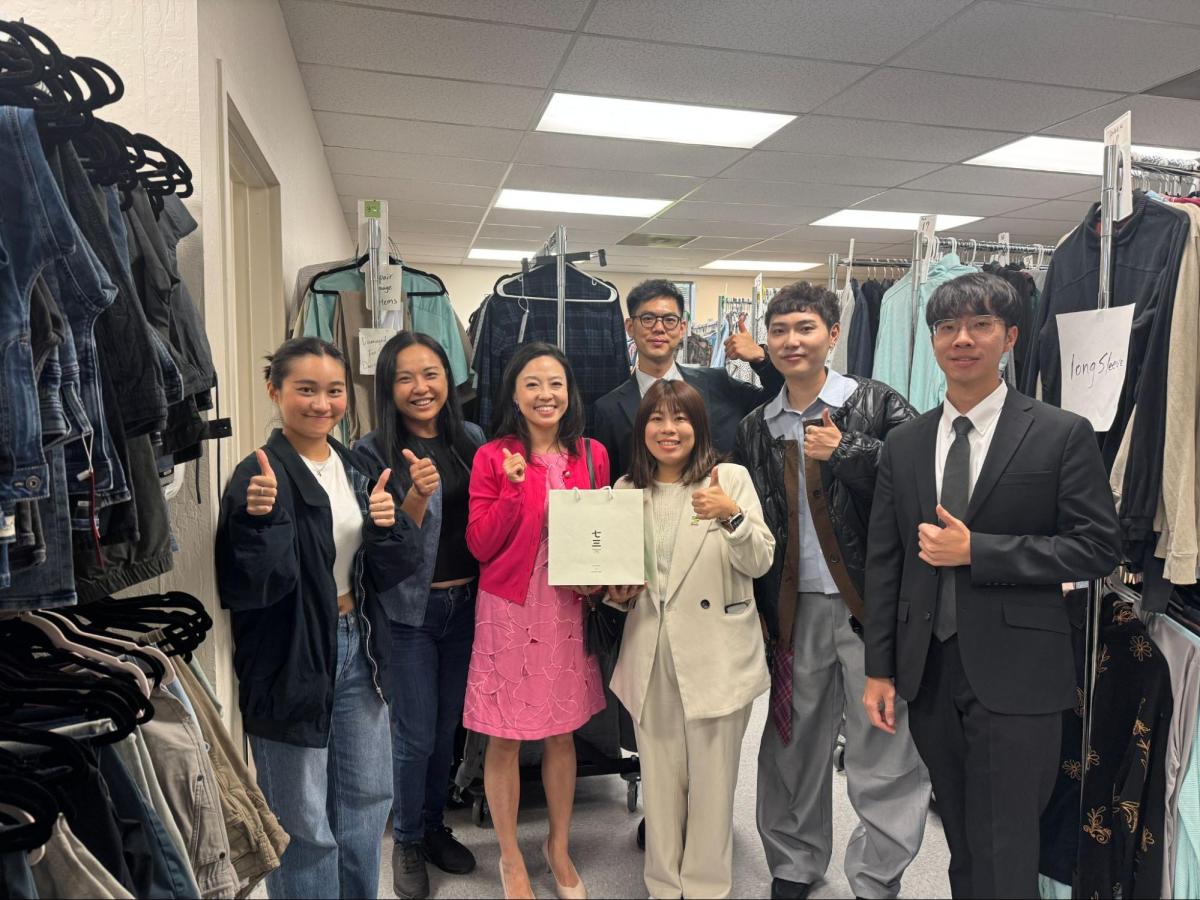
As data becomes increasingly central to how companies compete and make decisions, Taelor AI combines data analytics, artificial intelligence and human styling expertise to create a more personalized menswear rental experience. Based in the San Francisco Bay Area, the startup was also recognized in Inc. magazine’s 2025 Best in Business awards in the Best Startups category.
Through Taipei’s 2025 Youth Overseas Internship Program, Ariel and Charlie spent three months working with Taelor from two very different perspectives. Ariel focused on e-commerce merchandising and product operations, while Charlie worked across data analysis, product and business questions.
Their roles were different, but both encountered the same reality of startup life: information evolves quickly, assignments do not always come with ready-made answers, and the value of one task often depends on how well it supports the decision that comes next.
When Every Task Connects to the Next Decision
Ariel’s work in e-commerce merchandising gave her a close look at how products move from selection to market. Her responsibilities included sourcing and planning merchandise, updating product information, tracking inventory, and supporting promotional activities across third-party e-commerce platforms.
But merchandising was never only about the product itself.
Which brands fit the customer base? How might inventory affect upcoming sales? When should a promotion be introduced? Each decision was connected to another part of the business, from operations to sales and customer demand.
That experience gradually changed how Ariel viewed her role. Rather than treating each assignment as an isolated task, she began to see how individual decisions contribute to a wider commercial process.
Charlie encountered the same interconnectedness from the data side.
Soon after joining the team, he was asked to take on a new analysis project while rapidly learning Taelor’s product, data structure and existing workflows. In a startup environment where products and business priorities continue to evolve, data structures and analytical needs evolve with them. His challenge was therefore not simply to produce an analysis, but to understand the business question first and determine which information would be most useful in answering it.
Different roles led to a similar lesson:
In a startup, professional judgment is not only about doing a task well. It is also about understanding what that task needs to make possible next.
Turning Complexity into Something Actionable
Over time, both participants also developed a more deliberate way of approaching problems.
For Charlie, one of the most important changes came from learning to define the problem before diving into the data. He began by separating the essential questions from issues that could be addressed later, testing feasibility before committing significant time, and identifying the right colleagues to approach when additional context was needed.
The same shift appeared in how he presented his findings.
Rather than beginning with a long explanation of the analytical process, Charlie learned to lead with the conclusion, explain its likely impact, and then outline possible actions and risks. Analysis became valuable not simply because it was technically correct, but because it could help someone make a better decision.
Ariel’s work followed a similar logic from a commercial perspective. Managing multiple brands, products, inventory needs and promotions required her to identify priorities quickly and keep work moving within the pace of the business. Taelor’s results-oriented culture also reinforced the idea that progress is measured less by time spent and more by whether work moves the business forward.
Good work does more than organize information. It makes the next step clearer.
That became one of the defining lessons of their time at Taelor. In a fast-changing environment, waiting for every condition to be perfect is rarely an option. What matters is the ability to identify the most important question, make a sound judgment, and adjust as new information becomes available.
Building a Way of Working That Lasts
By the end of three months, the experience had influenced not only what Ariel and Charlie could do, but also how they understood their own strengths.
Ariel became more certain that she was drawn to environments that move quickly, demand flexibility and require constant problem-solving. Her work across merchandising, operations and project coordination also gave her a clearer sense of the directions she may want to pursue in startups, procurement and project management.
Charlie, meanwhile, developed a more systematic approach to data work: define the problem clearly, keep the scope under control, test feasibility early, and communicate results in a way that allows others to act. After completing a project, he also began reflecting on which methods worked well and which processes could be improved or reused in future work.
These are not always the kinds of skills that fit neatly into the technical section of a résumé.
Yet they may prove more durable than any single tool or platform. Technologies change. Products change. Industries change. What remains valuable is the ability to enter an unfamiliar situation, break a problem down, make a judgment, communicate clearly, and keep moving forward.
Growth is not always about having more answers. Sometimes it is about knowing how to begin when the answer is not yet clear.
What a Startup Experience Can Leave Behind
What Ariel and Charlie encountered at Taelor was more than the familiar image of startup life as “fast” or “flexible.”
The pace works because people have a direct relationship with outcomes.
In a lean team, product information, analytical insights, project updates and communication all affect what someone else can do next. Asking the right question, explaining an obstacle clearly, understanding priorities and knowing when to seek help therefore become part of the work itself—not optional soft skills added on top of professional expertise.
For Taelor, Ariel and Charlie contributed directly to ongoing work in merchandising, e-commerce operations and data analysis. While learning how a startup operates, they also brought their own capabilities into the team and helped move day-to-day projects forward.
For the participants, the experience offered something equally important: a clearer understanding of the environments in which they work best, the value they can bring, and the kinds of challenges they want to take on next.
And for Taipei, experiences like these create more than another line on a young person’s résumé. They give young people the chance to test their abilities in different industries, organizational cultures and international teams—and to return with a stronger sense of how they can contribute wherever they go next.
Silicon Valley may have been where this chapter took place. What they brought back was something more lasting: a way of approaching uncertainty with greater confidence, clarity and initiative.
Some places begin as a dream. Once you step inside, they can become part of the future you choose.